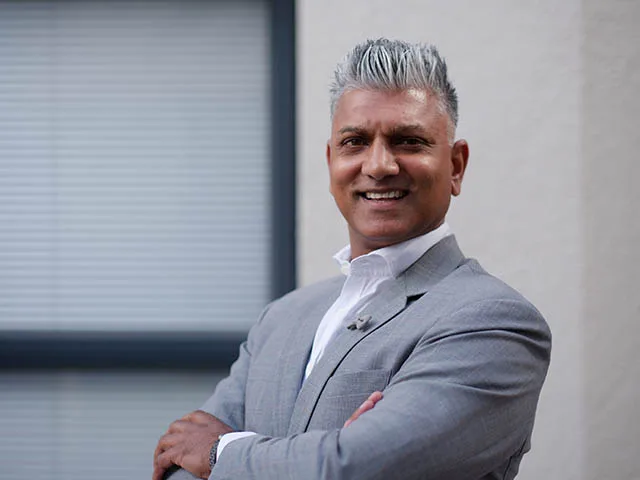
As the year comes to a close, few stories stand out as sharply as that of Damian Michael, Managing Director of Innovo Networks, whose recent recognition at the Entrepreneur of the Year Awards has placed a well-deserved spotlight on the work he has been driving in South Africa’s technology field. His approach to leadership is not merely technical; it is deeply human, unapologetically strategic, and rooted in a belief that South Africa remains one of the most underestimated grounds for innovation.
What emerges from his reflections is the portrait of a leader who has grown from building products to building cultures and who understands that the future of technology will demand more than innovation. It will demand adaptability, ethical clarity, and a firm commitment to developing people.
Entrepreneurship: A Battle of Culture, Not Code
Damian’s nomination for Entrepreneur of the Year is more than personal recognition; it is a testament to a business philosophy that rejects the obsession with technology alone. He argues that the real competitive advantage today lies in resilient cultures, not flashy tools.
His stance is compelling. A company that can think, learn, adapt, and pivot quickly will always outperform a business that relies solely on the strength of its product. In his view, many entrepreneurs fail because they chase grand, inspiring visions without grounding them in disciplined, 90-day execution cycles. In a complex industry, clarity beats charisma, and precision beats ambition.
This is not the conventional wisdom of Silicon Valley. It is a grounded, realistic, and distinctly South African understanding of what it means to build something that lasts.
AI Has Changed the Game, But Not in the Way People Think
According to Damian, the surge in AI adoption has forced companies to confront uncomfortable truths about their own infrastructure. The rush toward AI has exposed a silent crisis: poor data hygiene, outdated networks, and fragile IT foundations.
Innovo Networks has experienced increased demand because organisations now grasp an inescapable reality: without strong networks, clean data, and scalable infrastructure, AI is nothing more than a buzzword.
Damian’s view is firm, IT can no longer be treated as a budget line. It is the central nervous system of every modern enterprise, and AI has simply brought that fact into sharper focus.
Cybersecurity and AI: Two Sides of the Same Coin
Damian does not see cybersecurity as a separate challenge. He sees it as intertwined with AI, and he treats both as integral to how modern networks should be built.
Innovo’s approach is uncompromising. Instead of reactive, perimeter-based security, the company is investing in intelligent, adaptive systems that behave like biological immune responses. Networks should not only defend; they should learn, anticipate, and respond.
This stance is forward-thinking and, frankly, the only responsible attitude in a world where attackers use the same AI tools as defenders. The companies that survive the next decade will be those that integrate AI security from the blueprint stage, not as an afterthought.
South Africa’s Entrepreneurship: A Pressure Cooker of Potential
Damian’s view of entrepreneurship in South Africa is refreshingly assertive. He acknowledges the difficulties of a strained economy, infrastructure shortcomings, and a volatile market, but refuses to see them as reasons to give up.
Instead, he sees them as opportunities.
South Africa’s real-world problems, from logistics to education, create fertile ground for businesses willing to innovate with purpose. The belief that success here is impossible, in his opinion, is more a failure of mindset than market.
His optimism is deliberate, not naïve. And it reflects a deeper belief: the most successful South African entrepreneurs will be those who build businesses that are both commercially strong and socially meaningful.
The Future of IT: Democratisation, Quantum Disruption, and Ethical Reckoning
When Damian looks ahead, he sees an IT industry on the verge of profound shifts.
- Technology is becoming accessible to everyone, not only specialists, which means organisations need guides more than they need gatekeepers.
- Quantum computing threatens to rewrite the rules of security, forcing companies to start preparing now for a post-quantum world.
- Ethical decision-making will become a defining competitive advantage, as society becomes increasingly cautious about how data and AI are used.
His perspective is unapologetically firm: companies that ignore ethics will lose trust, and companies that ignore quantum change will lose their security.
Mentorship: South Africa’s Most Undervalued Economic Engine
Among all his commitments, Damian’s passion for youth mentorship stands out. He does not treat mentorship as a charity gesture; he sees it as structural economic scaffolding.
To him, mentorship offers three things young people desperately need:
- Realistic understanding of entrepreneurship
- Safe space to fail, learn, and try again
- Access to networks that can change their trajectory
His position is unwavering, South Africa’s greatest resource is its people, and without deliberate investment in their development, the country will continue to lose potential that should be shaping its future.
Final Thoughts
Damian Michael represents the kind of leadership South Africa needs more of: strategic, principled, and firmly grounded in reality. His insights cut through the noise surrounding AI, cybersecurity, and entrepreneurship. They challenge complacency, and they reject the idea that South Africa’s constraints are barriers rather than catalysts.
If anything, his story proves that innovation thrives under pressure and that South Africa remains one of the most promising frontiers for leaders willing to embrace complexity, uplift others, and build with both intelligence and intention.